
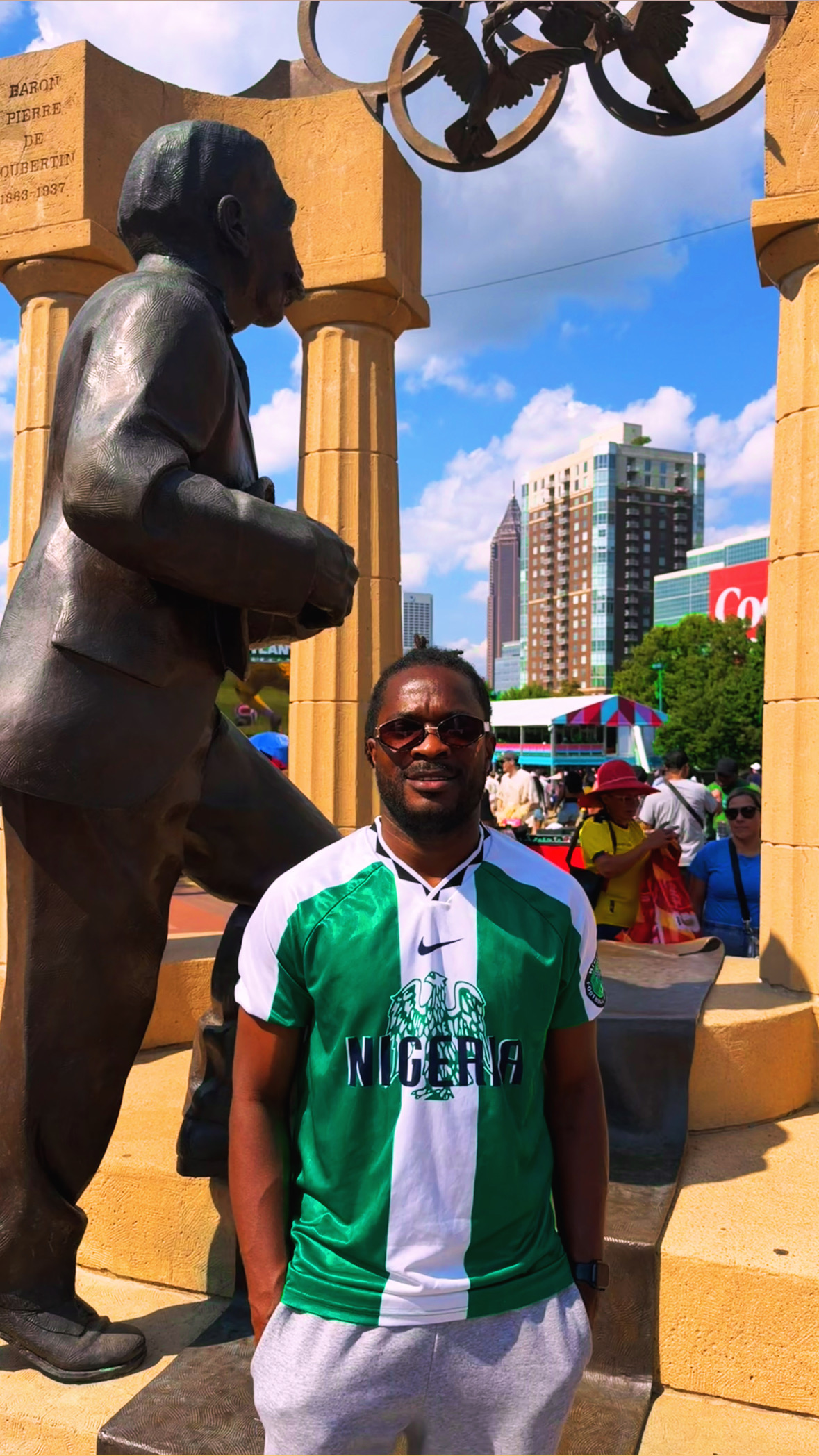
For over three decades, I have followed the Super Eagles the way only a Nigerian can. With emotion that lives in the chest. With pride that does not need explaining. With pain that feels almost personal. I grew up watching these players as heroes. I carried the green-white-green from Nigeria to the United Kingdom and now to the United States, and through every city, every time zone, every life transition, the Super Eagles remained one of the few constants that made me feel unambiguously Nigerian.
That is why their absence from the 2026 FIFA World Cup does not feel like a missed tournament. It feels like a national statement made in silence.
The World Cup is currently being staged across the United States, Canada and Mexico. Africa has a record ten representatives at this expanded 48-team tournament. Ten flags. Ten anthems. Ten opportunities to tell African stories before an estimated five billion viewers. Nigeria, Africa’s most populous nation of over 220 million people, is not among them. That is not just painful. It is symbolic.
The football world noticed. Former England captain John Terry described Nigeria as “a big miss” and said he would have loved to see “a top team like Nigeria” at the tournament. When respected voices in world football say the World Cup is poorer without you, it confirms what every Nigerian supporter already feels in their bones.
This is not a generation without talent. Victor Osimhen was named African Footballer of the Year in 2023. Ademola Lookman won the same award in 2024. In consecutive years, the finest male footballer on the entire continent was Nigerian. Yet Nigeria sits 26th in the FIFA World Rankings, the second highest ranked team absent from this tournament. A country producing Africa’s best players in back-to-back years still could not qualify. That is not misfortune. That is a system failing its own talent.
But before we talk about the system, we must talk about what the system cost us.
The FIFA World Cup reaches five billion viewers. For one month it is the single most watched human event on earth. Countries that participate do not merely play football. They broadcast themselves. Tourism boards gain global visibility. Fashion and music reach new audiences. Players become international brands. A single iconic moment — one save, one goal, one celebration — can change a player’s career, a city’s reputation and a country’s global image simultaneously.
Nigeria will not have a single one of those moments in 2026.
Nigerian jersey sales that would have spiked globally will not happen. Sponsorship conversations that would have opened around Osimhen and Lookman at a World Cup will not happen. The diplomatic soft currency that comes from a country being cheered across packed North American stadiums will not happen. The hundreds of millions of social media impressions generated around a competitive Nigerian campaign will not happen. None of it will happen because Nigeria is not there.
For Nigerians in the diaspora this absence carries a different weight. I live in Atlanta. I know what it feels like when the Super Eagles are at a major tournament. Bars fill. Strangers become family. Children discover where their parents came from through the simple electricity of a football match. The Super Eagles have always been one of Nigeria’s most powerful cultural ambassadors, not because they were told to be, but because they carried something real. In 2026 that energy has nowhere to go.
Then came the World Cup opening ceremony. Burna Boy performed alongside Shakira before a global audience. Nigerian culture stood proudly on the biggest stage in sport. I watched with pride and then with a sadness I could not fully explain. Nigeria gave the World Cup its music and not its football. Imagine how much more powerful that moment would have been if the Super Eagles were also in the tournament. Nigerian music and Nigerian football arriving together on the global stage would not have been entertainment. It would have been a statement. Instead only half the story was told.
Meanwhile Cape Verde, a nation of under 600,000 people, became one of the tournament’s most compelling stories. Their goalkeeper Vozinha became a global name almost overnight after their opening match against Spain. Brands noticed. Scouts noticed. The world noticed. A nation of 600,000 is now in a conversation that Nigeria, with 220 million people and decades of football pedigree, should have been leading.
And at the centre of Nigeria’s absence sits the Nigeria Football Federation.
I have watched from Atlanta, thousands of miles from Lagos, and even from here the embarrassment is visceral. The NFF’s handling of this qualifying campaign was a governance failure by any honest measure. Four coaches across one qualifying cycle — Jose Peseiro, Finidi George, Augustine Eguavoen and Eric Chelle — each reflecting panic rather than planning. When Finidi resigned citing interference and lack of support, I did not feel anger at Finidi. I felt anger at a system that consumes good people and produces nothing. The NFF then filed a protest with FIFA challenging an opponent’s player eligibility, a last-gasp manoeuvre that changed nothing except perhaps Nigeria’s dignity. Former Super Eagles captain John Obi Mikel said publicly what millions felt privately: “The people at the NFF, they should all resign. It’s a disaster.” South Africa topped Nigeria’s group with just 18 points, the lowest winning tally of any group winner on the continent, and Nigeria still finished below them. That is not bad luck. That is entitlement mistaken for preparation.
Morocco chose differently. It invested in infrastructure, youth academies and long-term planning. Its senior team reached the 2022 World Cup semifinal, the first African nation ever to stand that close to a final. Today Morocco co-hosts the 2030 World Cup. Morocco understood that football is national strategy. Nigeria must learn that lesson now. Governance must become accountable. Coaching must follow philosophy. Youth development must be rebuilt from school level. The diaspora must be engaged not ignored.
History is not strategy. Population is not planning. Talent is not structure. Passion is not policy.
The next time Burna Boy stands on a World Cup stage, the Super Eagles should be standing right beside him. Nigerian music and Nigerian football together before the world. That is not a dream. That is a standard Nigeria once held and must reclaim.
But it will never happen from the boardroom that failed us in 2026.
Marketing Strategist | Social Impact Leader | Entrepreneur
MBA Candidate, Georgia State University