
In a classroom in Ogbere, a twelve-year-old girl picked up a robotics kit for the first time.
She had never seen one before. Within the hour, she was building.
That moment — quiet, unremarkable to an outsider, but transformative to everyone in the room — is exactly what the Louis Awode Foundation exists to create. Not once. Not for a handful of lucky children. But at scale, across every geopolitical zone in Nigeria, for tens of thousands of young people who have been told, implicitly or explicitly, that the digital economy was built for someone else.
It was not built for someone else. And we intend to prove it.
What We Are Doing
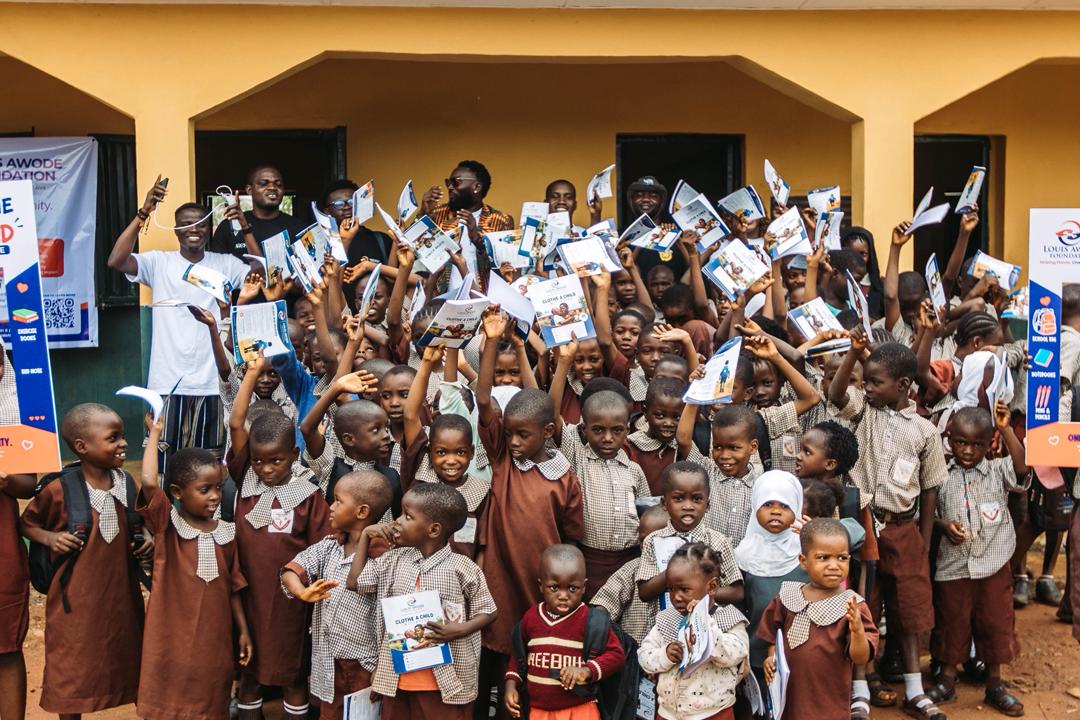
Following the success of our maiden outreach program in Ogun State—which reached nearly 1,800 pupils and students, with over 460 completing structured hands-on technology training—the Louis Awode Foundation is launching a nationwide initiative to equip more than 20,000 Nigerian children with the skills, tools, and mindset to thrive in a rapidly changing world.
The program will expose children to robotics, coding, artificial intelligence, 3D printing, animation, digital content creation, and entrepreneurship. Through school-based technology hubs, mentorship networks, and national robotics competitions, we are not just teaching skills — we are building a pipeline of young Nigerian innovators.
Why It Cannot Wait
Africa’s technology economy is growing faster than most people realize. The Middle East and Africa’s industrial robotics market alone is projected to reach $4.29 billion by 2030. Across the continent, automation is reshaping agriculture, manufacturing, and logistics. Entire industries are being rebuilt around digital fluency.
The question is not whether this transformation is coming. It already has. The question is whether Nigeria’s most vulnerable children will be part of it—or left further behind.
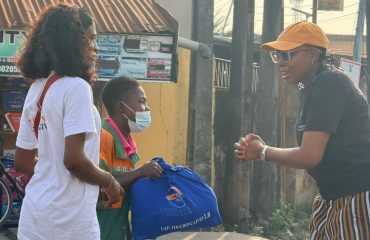
Teachers in the schools we visited in Ijebu-Ode and Ogbere were candid. Many of their students arrive without notebooks, without pens, without the basic materials that learning requires — because families living on farming incomes simply cannot bridge the gap. When we arrived with school bags, learning materials, and technology training, one teacher described it simply: “This came at the right time.”
It always comes at the right time. Because it is always overdue.
The Vision Behind the Work
LAF Founder Louis Awode grew up in Ogbere. He knows this community not as a data point, but as home. His foundation’s focus on educational access and digital empowerment is not a strategy — it is personal.
“I understand what it means to grow up without adequate learning materials and opportunities,” he says. “What we are trying to do is give children the kind of exposure and encouragement that can completely alter their life trajectory.”
That belief shapes every aspect of the program. Students will not simply attend workshops—they will design robots, pitch business ideas, compete nationally, and connect with technology firms and academic institutions offering scholarships, mentorships, and internship pathways. The most promising participants will have doors opened that their communities never knew existed.
“When a child from a rural community successfully builds a robot or develops a business idea for the first time, it changes their mindset permanently,” Awode says. “They begin to see themselves as creators rather than spectators in the digital economy.”
Building the Infrastructure
The national rollout will establish technology hubs across Nigeria’s six geopolitical zones, each equipped with robotics kits, 3D printers, digital design software, and certified instructors. Zonal and national robotics competitions will give students early exposure to technology careers and direct access to industry professionals.
Discussions are already underway with state governments, private sector technology companies, schools, and community organizations to make these hubs a reality.
Our Ogun State program was implemented in partnership with The Archers, whose Head of Brand Experience, Michael Olabode, coordinated logistics, volunteer mobilization, media engagement, and training delivery. It is the model we are now scaling.
What We Believe
The future economy will reward young people who can innovate, code, design products, and compete globally. We believe those young people are already here—in rural classrooms, in underserved communities, in towns that do not appear on any investor’s radar.
They are waiting for the tools. We are bringing them.
This version uses the foundation’s own voice—direct, mission-driven, and warm—which works well for a website audience that is either a potential donor, partner, or community member. The section breaks make it easy to navigate on screen